Mapping User Activity Peaks for Effective Rollout of Time-Bound Promotions in Wagering Apps
Ellis Neumann · Aug 26, 2026
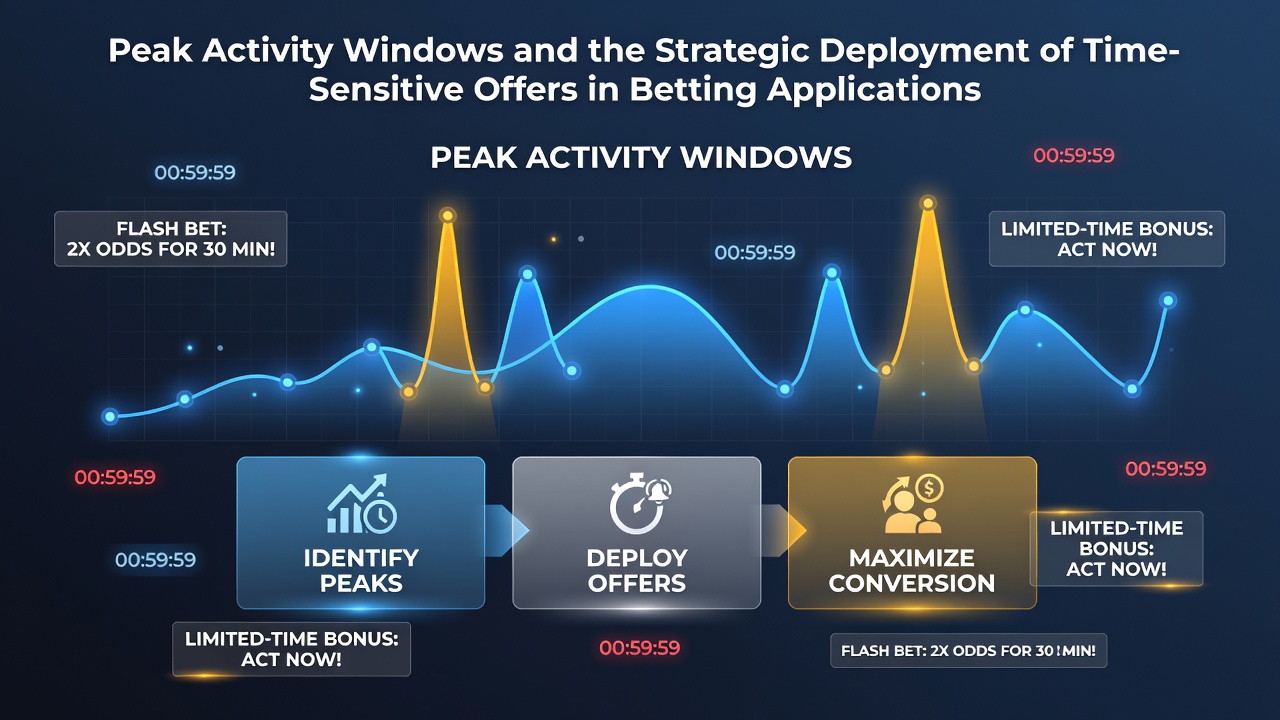
Mapping User Activity Peaks for Effective Rollout of Time-Bound Promotions in Wagering Apps
Betting applications track user engagement through detailed analytics that reveal consistent patterns in login times, bet placements, and session durations across different time zones and event schedules. These patterns, often described as peak activity windows, typically align with evening hours on weekdays, extended periods on weekends, and spikes during live sports broadcasts or major tournaments. Platforms collect this information from aggregated user data to determine when traffic reaches its highest levels, allowing operators to align promotional timing with natural surges in activity.
Identifying Core Activity Windows Through Platform Data
Operators examine metrics such as concurrent users, average session length, and conversion rates on specific days to build profiles of when engagement intensifies. Research from industry monitoring groups indicates that activity often climbs sharply after 6 p.m. local time in major markets, while weekends produce broader plateaus lasting several hours longer than typical weekday patterns. In August 2026, reports highlighted additional peaks tied to international soccer qualifiers and baseball playoffs, where live betting volumes rose noticeably compared to off-peak periods. Those who study these datasets note that mobile sessions frequently outpace desktop access during these windows, prompting adjustments in how time-sensitive offers are presented across devices.
Data Sources and Analytical Approaches
Multiple organizations compile reports on these trends, including contributions from the American Gaming Association that track state-level variations in online participation. European sources such as the European Gaming and Betting Association provide parallel insights into cross-border patterns, revealing how time zone differences influence simultaneous activity across regions. Analysts combine these figures with internal platform logs to forecast upcoming high-traffic intervals, creating schedules that place limited-time incentives at moments when user attention is already elevated.
Deploying Time-Sensitive Offers Within Identified Windows
Once peaks are mapped, platforms introduce offers such as flash reload bonuses, boosted odds on live events, or short-duration free bet credits that expire within the active period itself. These promotions are configured to appear through push notifications or in-app banners precisely when session counts begin their ascent, which increases the likelihood that users encounter them while already engaged. Figures from 2026 platform audits show that offers launched during documented evening surges produced higher redemption rates than those distributed at random intervals throughout the day. The approach relies on automated systems that trigger campaigns based on real-time thresholds rather than fixed clocks, allowing adjustments when external factors like weather disruptions or schedule changes alter expected traffic.
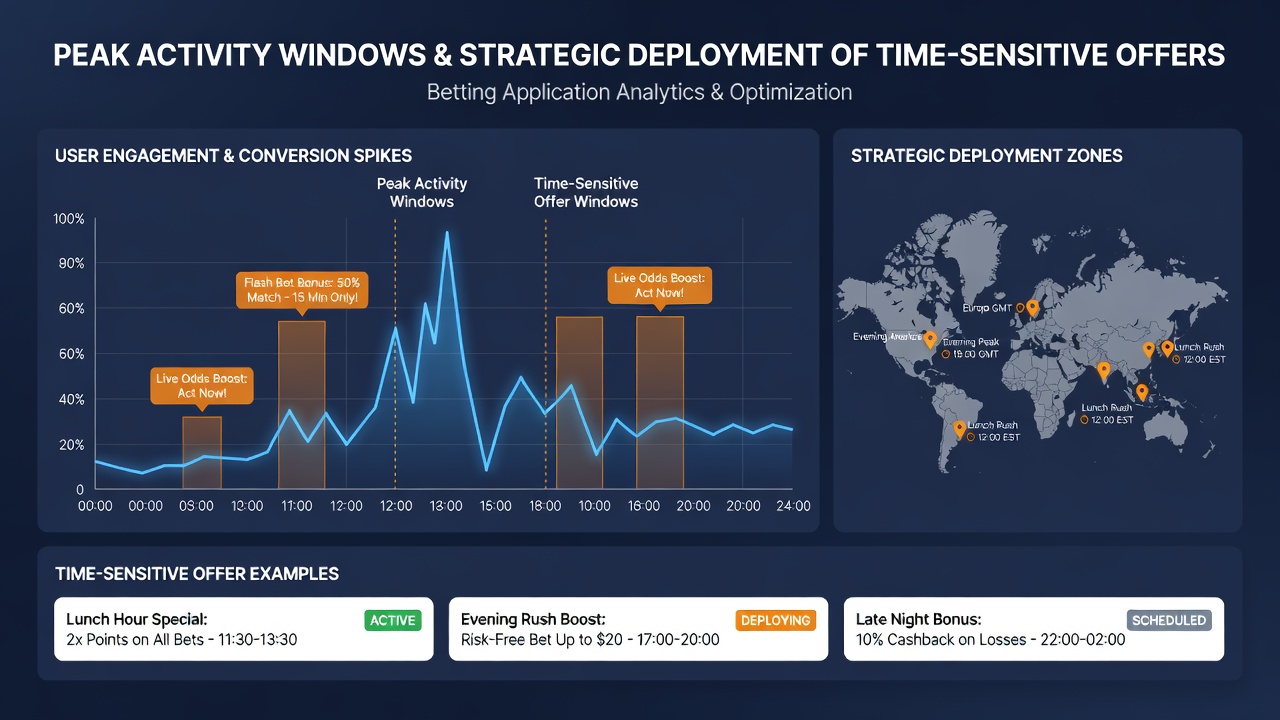
Case examples from operators in multiple jurisdictions demonstrate how sequenced rollouts maintain momentum across a single peak window. One operator might release an initial deposit match at the start of an evening surge, then follow with a live-event multiplier once initial traffic stabilizes. This layering keeps users within the application longer without requiring separate login cycles. Observers note that such sequencing appears more frequently in markets where hybrid sports and casino options coexist, as transitions between categories can extend session duration when timed correctly.
Regulatory Context and Compliance Requirements
Authorities in various regions require clear disclosure of offer expiration times and eligibility rules to prevent misleading presentations. Canadian provincial regulators and Australian state bodies both mandate that promotional terms remain visible throughout the offer window, with particular attention to mobile delivery formats. Compliance teams review campaign schedules against these standards before activation, ensuring that automated triggers do not bypass required notices. Data from regulatory filings in 2026 indicated steady growth in online participation alongside increased scrutiny of timed promotions, leading platforms to incorporate audit trails that log exact deployment moments and user interactions.
Impact Measurement and Adjustment Cycles
Post-campaign analysis compares redemption volumes, average bet sizes, and retention metrics against baseline periods to refine future timing decisions. Platforms often test slight variations in start times within the same overall window to identify optimal launch points. Reports compiled by research institutions show that small shifts of thirty to sixty minutes can alter participation levels, particularly when overlapping with live event milestones such as halftime or inning changes. These findings feed back into the mapping process, updating predictive models for subsequent months.
Conclusion
Peak activity windows provide a structured framework for placing time-sensitive offers where user presence is already concentrated, supported by ongoing data collection from operators and regulatory bodies across different regions. The combination of analytical forecasting, automated deployment, and compliance checks creates a repeatable process that aligns promotional activity with documented traffic patterns. As platforms continue to refine these methods through 2026 and beyond, the emphasis remains on matching offer duration to actual engagement cycles rather than arbitrary schedules.